
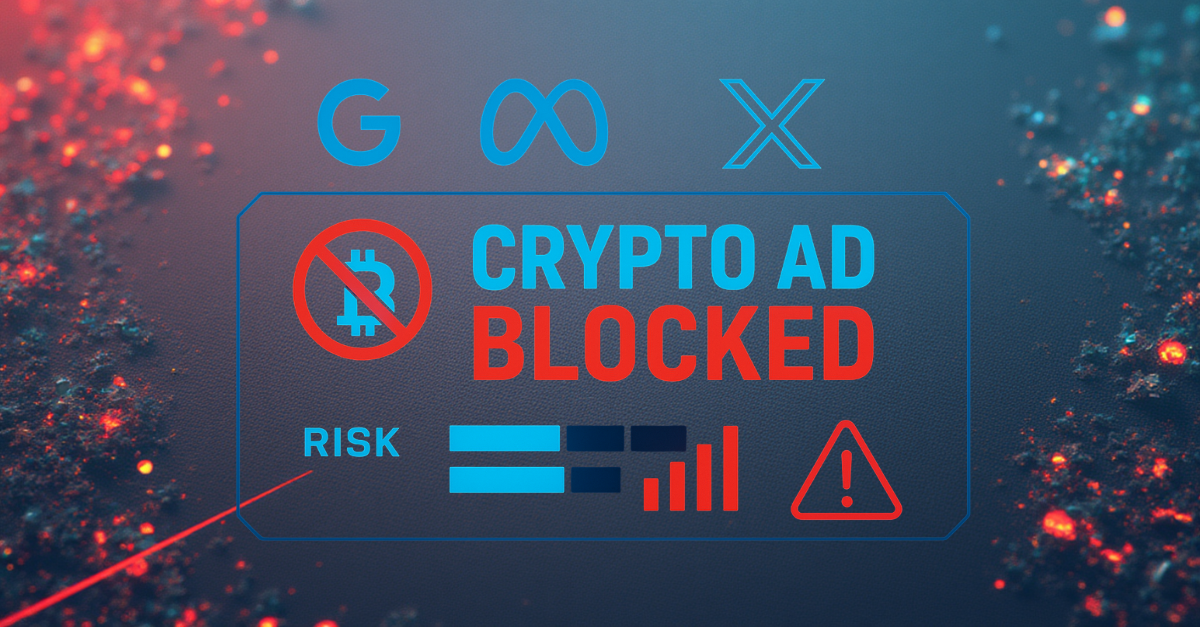
The crypto advertising paradox is simple: major platforms want innovation and engagement, but they also fear being blamed for scams, failed token projects, and user losses. As a result, legitimate teams often get blocked, delayed, or throttled even when they operate responsibly.
Crypto companies have always dealt with regulations, but the biggest gatekeepers have rarely been governments. They’ve been platforms. Google, Meta, and X effectively decide who gets seen, who gets restricted, and who must wait in limbo.
1) Protection First, Visibility Second
For most tech platforms, crypto often sits in a high-risk bucket alongside gambling and high-velocity financial claims. Not because all Web3 projects are dangerous, but because the cost of being wrong is too high.
One misleading ad can trigger:
- Thousands of user complaints
- Regulatory fines
- Headlines that damage platform trust
- Pressure from governments
- Backlash from users
So platforms act conservatively. Their default stance becomes: block first, evaluate later. If you want a hard reference point, Google documents the constraints and certification logic for crypto-related advertising here: Cryptocurrencies and related products (Google Ads policy).
2) The Approval Maze: When Good Actors Look Like Bad Ones
Even compliant projects struggle.
Most teams deal with:
- Long approval queues
- Rejections with no clear explanation
- Requests for documents that didn’t exist two years ago
- Restrictions that vary by country
- Category-level bans that lump everyone together
A global exchange or payments startup can be licensed, audited, and transparent, yet still fail an automated risk filter. Crypto is often treated as a high-volatility identity, not an industry with nuance.
3) The Workaround Era: Where Crypto Marketing Actually Happens
As restrictions grew, crypto marketers adapted. Instead of relying on major ad networks, they shifted toward trust-led distribution:
- Organic content
- Community-driven acquisition
- Thought leadership
- X threads and LinkedIn posts
- Short videos and education series
- AMAs and live sessions
- International micro-influencers
- Referral-based growth
- Niche crypto media
This shift wasn’t just tactical, it reshaped the culture. Reputation is built through consistency, not ads. Trust is earned through clarity, not targeting.
4) The Cost of Silence: When Visibility Limits Hurt Users Too
Restrictions don’t only hurt companies. Users lose access to good information. Newcomers are more likely to encounter hype, FOMO, memes, and speculation because responsible projects struggle to be seen.
Policies intended to protect users sometimes push attention toward the loudest voices, not the safest ones. That’s the hidden downside of the crypto advertising paradox.
Practical playbook: staying visible without breaking trust
A) Build “policy-proof” messaging
- Lead with product utility and user outcomes, not token price narratives.
- Avoid absolute guarantees; use clear scope, eligibility, and risk language.
- Use consistent naming across site, ads, and social profiles.
B) Make compliance legible
- Show licensing status, jurisdiction coverage, and operational controls.
- Publish a short “how we protect users” section with concrete guardrails.
- Keep disclaimers visible (but human-readable).
C) Use content as your durable distribution layer
- Create “evergreen” explainers that attract search demand over time.
- Build internal links across related hubs and insights (so Google understands your site map).
- Turn one strong article into multiple short formats for LinkedIn and X.
If you want the next layer of this topic, the series continues here: The Regulation Layer: How Countries Shape Crypto Visibility.
Closing Thought
The advertising paradox isn’t going away. But projects that communicate clearly, educate consistently, and operate with transparency will keep finding ways to reach the right audience.
Crypto doesn’t need to bypass platform restrictions to grow. It needs to master the art of being trusted under them.
Disclaimer: This article is for informational purposes and does not constitute financial or legal advice.